For much of my life, I’ve beaten myself up for not having one clear career trajectory. I’ve always had so many different interests and indulged them. Even in undergrad instead of deciding what major I wanted, I completed both an English and Biology degree. Not just double major. Double degree (it only took one additional year).
I still am fascinated by all things biology. Which might be why my English dissertation was about biotechnologies in novels and how they are thought experiments for readers uncertain about how they feel about biotech.
But even as an academic, my publication record was all over the place. I wrote about monsters, colonialism, biotech, student learning and more. As much as I enjoyed it, I also felt there was something wrong about so many different interests.
I’ve changed my mind recently. I now see value in all these different things.
This value comes from the cross pollination of ideas in different areas that offers the opportunity to think about problems in a new way.
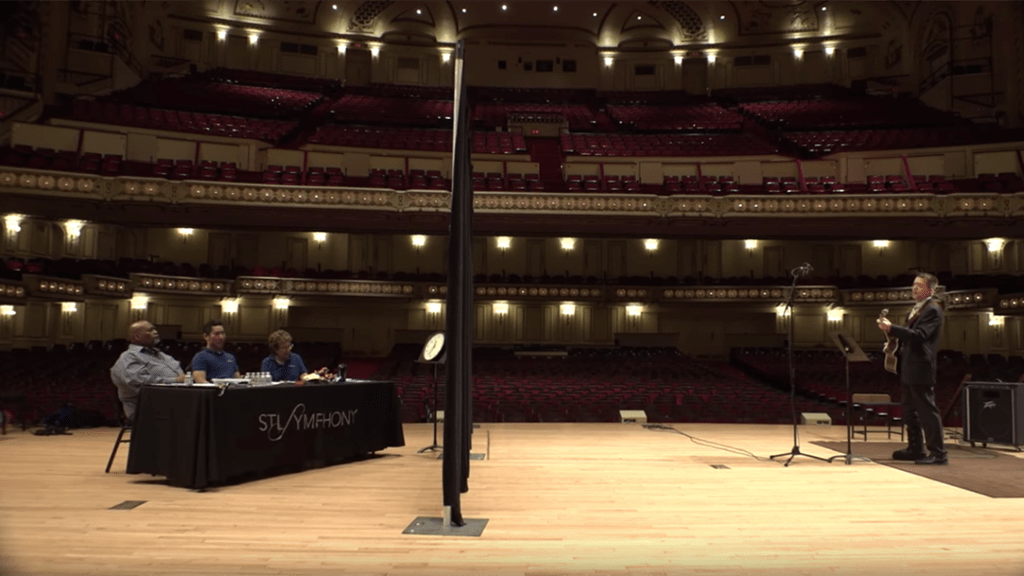
One of my favourite examples is the blind audition.
If you’re not familiar, the example comes from a problem in orchestras that they were heavily male-dominated despite well-trained women who would audition. So the Boston Symphony introduced blind auditions where judges sat behind a screen so they could not see the player.
Problem is, they still had a problem and were puzzled by it.
Then they made players take off their shoes. 50% of women made it past the first audition.
The sound of women’s heels on the floor was creating an unconscious bias.
The problem with unconscious bias is that its unconscious. We can try to become aware of our unconscious biases, but they are often very well ingrained and reinforced by social expectation, language and images.
So what would this look like for HR? Because bias is everywhere and too often the halo effect of hiring those who look like us means we are replicating the problem the Symphony had.
Some of the opportunities:
Blind resume reviews, and if using AI, anti-bias trained AI
Gender neutral language in job ads
Predictive workforce analysis based not just on past experience but on desired outcomes
Training hiring managers to support equitable hiring practices
Performance management systems with objective scales and metrics
We have the opportunity to create better versions of ourselves through technology: to allow people whose skill development doesn’t look like a linear path, whose education isn’t from a big name school big name to flourish, to find meaningful work, to contribute, to be part of all life.
Taking a lesson from a different industry, a different practice, and a different era offers potential solutions to problems plaguing us today in HR. There’s value in that cross-pollination.
And if you’re curious to hear more, check out the video recording of me talking about this (my first PechaKucha!)


Leave a Reply